
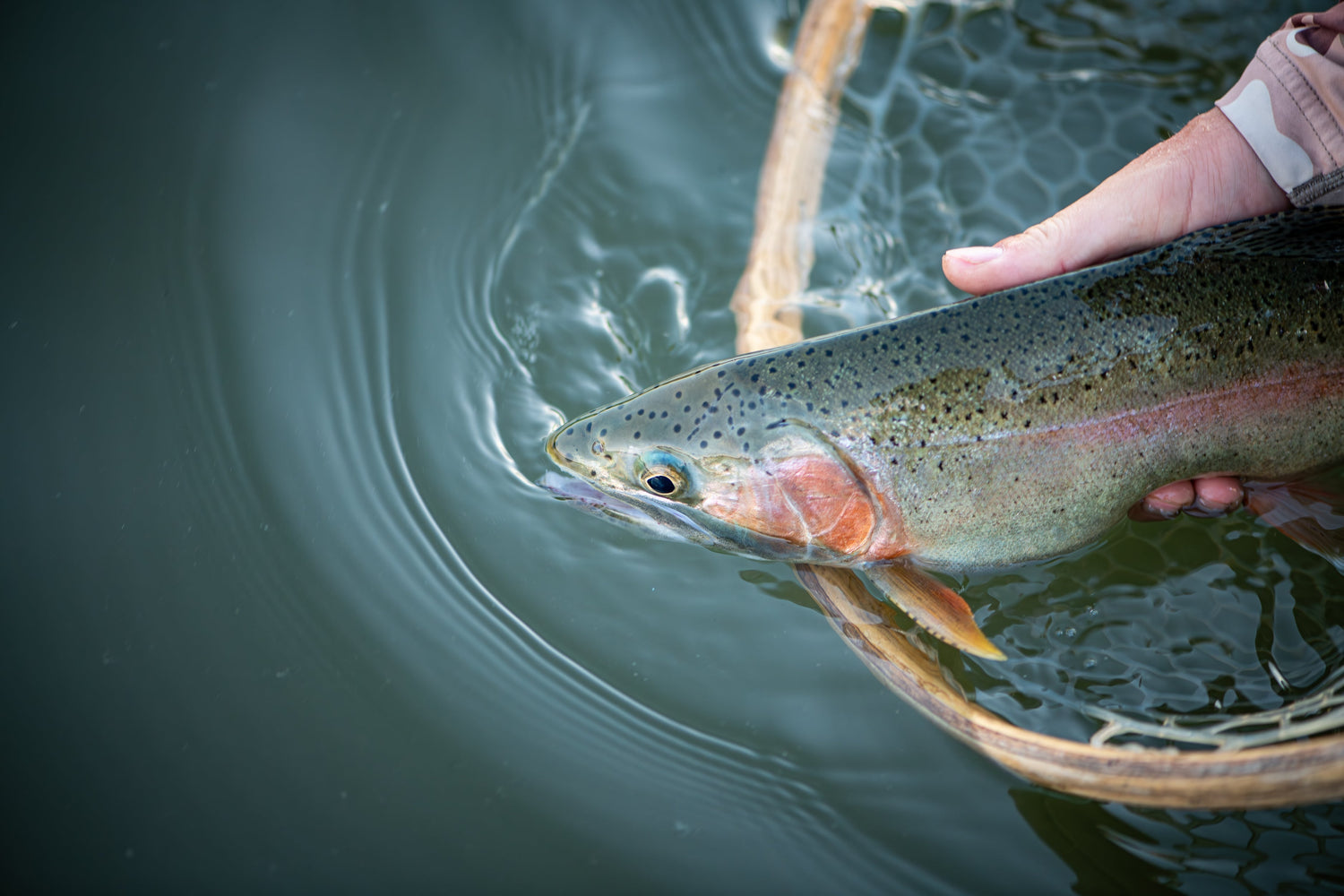
I was twelve years old when I tied my first beadhead gold ribbed hare’s ear nymph.
It was messy. The dubbing was uneven. The ribbing wasn’t perfect. The head was a little too big.
But it caught a fish.
And that changed everything
The Kit
My parents gave me a fly tying kit for Christmas. One of those Bass Pro Shops starter kits with a vise, some basic tools, thread, hooks, and a few materials.
I set it up at home and spent the entire winter tying flies.
I didn’t know what I was doing. I was following instructions from a book, watching my hands try to replicate what the pictures showed. Some flies looked decent. Most didn’t.
But I kept tying.
Because opening day of trout season in Pennsylvania was coming, and I wanted to be ready.
The First One
The beadhead gold ribbed hare’s ear nymph was one of the first patterns I learned.
It’s a simple fly. Bead. Thread. Tail. Dubbing. Rib. Wingcase. Done.
But when you’re twelve and learning to control thread tension, manage dubbing, and tie off a fly without it falling apart, nothing feels simple.
I tied it. It was messy. The dubbing was lumpy in some spots and thin in others. The gold ribbing wasn’t evenly spaced. The bead sat a little crooked.
But it looked like a nymph. And that was enough.
I tied a dozen more that winter. Each one a little better than the last. Each one giving me a little more confidence that maybe - just maybe - these flies would actually work.
Opening Day
Opening day finally came.
Neshaminy Creek in Bucks County, Pennsylvania. A put-and-take stocked fishery. The kind of place where every angler in the county shows up at dawn, shoulder to shoulder, waiting for the clock to strike 8 am.
I rigged up with an indicator and tied on one of my hare’s ear nymphs.
I cast. I watched the indicator. I waited.
A few more casts, just like the first.
And then it went under.
I set the hook. The rod bent. And I brought in my first fish on a fly I had tied myself.
I was ecstatic.
It wasn’t a big fish. It wasn’t a wild fish. It wasn’t even a particularly memorable fight.
But it was mine. I had tied the fly. I had cast it. I had caught the fish.
And in that moment, I was hooked.
What Changed
After that day, I couldn’t stop tying.
I started accumulating more materials. More hooks. More dubbing. More feathers. I’d go to the fly shop and stare at the walls of materials, trying to figure out what I needed next.
I tied every chance I got. After school. On weekends. Late at night when I should have been sleeping.
I tied hare’s ears. Pheasant tails. Woolly buggers. Elk hair caddis. Adams. Anything I could find a pattern for.
Some of those materials I still have today. More than thirty years later. Feathers I bought as a kid. Dubbing I’ve been working through for decades. Tools I’ve used so many times the handles are worn smooth.
Because that first fish didn’t just teach me how to tie a fly. It taught me that tying flies mattered. That the flies I made with my own hands could catch fish. That I didn’t need to buy expensive patterns from a shop - I could make my own.
And that changed everything.
The Pattern Today
I still tie beadhead gold ribbed hare’s ear nymphs.
It’s a staple in my box. Always has been. Always will be.
I tie them cleaner now. The dubbing is more even. The ribbing is spaced better. The bead sits straight.
But the pattern is the same. And the reason I tie it is the same.
Because it works.
It worked when I was twelve years old on a stocked creek in Pennsylvania. And it works now on wild trout streams, tailwaters, and spring creeks.
It’s not flashy. It’s not complicated. It’s not the kind of fly that gets featured in magazines or wins tying competitions.
But it catches fish. And it reminds me why I started tying in the first place.
Why It Matters
Every fly tyer has a pattern that changed everything.
The fly that made them believe they could do this. The fly that caught their first fish. The fly that turned tying from a curiosity into a passion.
For me, it was a messy, uneven, slightly crooked beadhead gold ribbed hare’s ear nymph tied by a twelve-year-old kid who didn’t know what he was doing but was willing to try.
That fly taught me that tying isn’t about perfection. It’s about process. It’s about learning. It’s about putting something you made into the water and trusting that it will work.
And when it does? When that indicator goes under and the rod bends and you bring in a fish on a fly you tied yourself?
That’s the moment everything changes.
The Lesson
Thirty years later, I’m still tying.
I’ve tied thousands of flies. I’ve learned new techniques. I’ve experimented with new materials. I’ve tied patterns I never would have imagined as a kid.
But I still tie hare’s ear nymphs.
Because that pattern didn’t just catch a fish. It taught me that I could do this. That I could tie flies that worked. That I could be part of this craft.
And that’s a lesson I carry with me every time I sit down at the vise.
The pattern that changed everything doesn’t have to be complicated. It doesn’t have to be perfect. It doesn’t have to be innovative or cutting-edge.
It just has to work.
And when it does, it changes everything.
Tight lines,
John Place
Firehole Outdoors


3 comments
Consistent Mediocrity
“It just has to work.
And when it does, it changes everything.”
Last two sentences are the best.
Freddy Block
What a great read and so heartfelt. Thanks for sharing! This hit home and made me think (hard) about my start(s) at fly tying; once as a young guy, then rekindled as an adult. It was that first fish on a fly I tied that changed everything here too. For me, the fly was a Zug Bug, but it could have been “any” pattern to come off my vise. What mattered most is that it worked! It was all the confidence building I needed: one fly, one take, one memory, to set a course in life of fly tying passion that burns, and burns, and keeps us wanting more.
Michael A Paler
The fly that changed everything for me was an Elk Hair Caddis. I didn’t start fly fishing until I was in my late 30’s and shortly after learning I started tying flies. I fish in northern Michigan all the time and caddis are everywhere. My first EHC was not proportional. The elk hair wing was too long, the head was too big, the hackle wraps were not evenly spaced and the wing was easily moved around the hook. I remember wading out into the river and seeing trout rise for egg laying caddis. I took my EHC size 14 from my fly box, tied it on and waited for a rise. I saw a fish sipping in a riffle, made about a half dozen casts and WHAM! I hooked a nice 16” rainbow! I was so proud that I caught a fish on a fly I tied! Now I am in my 60’s and tie almost everyday. And that 1st EHC? It fell apart with that rainbow, but it hangs from my fly fishing hat.
Leave a comment
All comments are moderated before being published.
This site is protected by hCaptcha and the hCaptcha Privacy Policy and Terms of Service apply.