
On the Water // A series on lessons, humility, and the river as teacher
A Beautiful Drift
Guest post by Tom Costa
The older I get, the more I realize that the trout I remember most are not always the biggest ones, or even the ones I caught in numbers.
They are the unexpected trout.
The ones that come from places that look fishy enough to make you hopeful, but doubtful enough to keep you from fully believing. A thin seam in skinny water. A glassy pocket on the far side of a boiling rapid. A tumble-down riffle that looks too shallow to hold anything but current and light. And then, somehow, a trout is there.
That has always felt to me like one of the great pleasures of fly fishing.
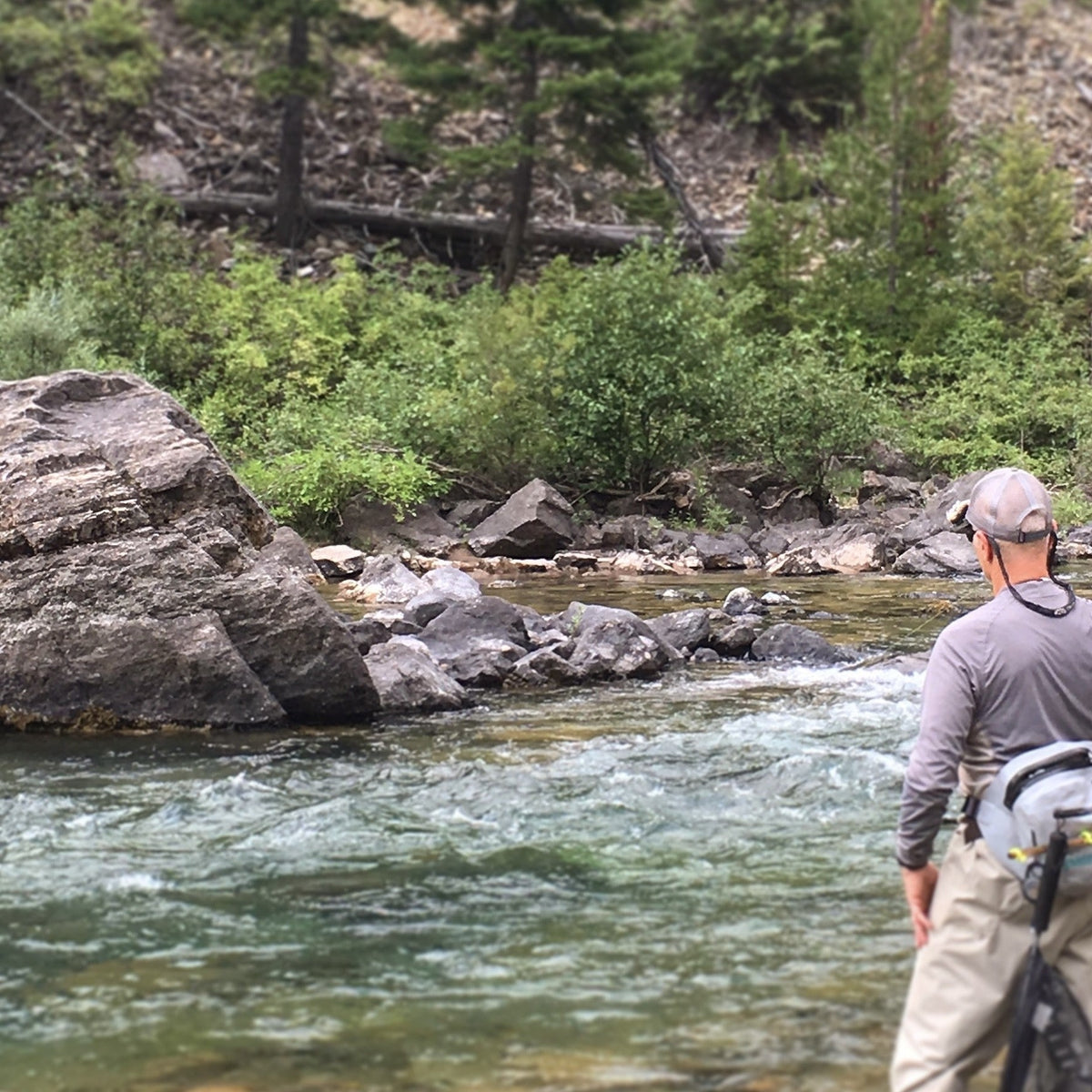
Fly anglers move through water differently than most fishermen. We carry everything on our person. A fly box or two. Tippet. Nippers. Floatant. A spool of leader tucked into a pocket. We are not anchored to anything but our passion. We hunt as we go, reading water, slipping along banks, working upstream or down, always looking for the next bend, the next seam, the next little piece of possibility.
And as I have gotten older, I have come to appreciate that kind of fishing even more.
The young men - sons, nephews, all that long-legged confidence - always seem to find the obvious good water. They are strong and nimble. They can wade heavy current without thinking twice. They can climb into places I look at now and wisely leave alone. They have the stamina to cover big stretches and throw long casts to trout that may have never seen a man-made fly.
Us old guys have to do it a little differently.
We fish with experience. With craftiness. With the accumulated instinct that comes from years of looking at moving water and asking, Could there be one there?
Because if we want to keep catching trout, we often have to find them in the least likely places.
One day in Montana, I was walking a back channel off the main stem. The water had that western feel to it - broad current nearby, but this side channel quieter, hidden a little, braided off from the main force of the river. The bank was tight with overhanging alders, and the current slid dark beneath them in places where you could barely see what was under the branches.
I noticed a stretch of water no more than four feet long, tucked up under those alders.
It was the kind of spot most anglers would pass without a thought. Too hidden. Too small. Too awkward. But something about it stopped me.
There has to be a trout in there, I thought.
I stripped off a little line and made a short flip upstream, just enough to let the fly drift naturally under the overhang. My hand tied elk hair caddis landed softly and began to float into that hidden little lane.
As it approached the place where I imagined a trout might be holding, I remember thinking, almost involuntarily, What a beautiful drift.
That is one of the small satisfactions fly fishermen understand. Sometimes, even before a fish rises, the cast and drift feel complete in themselves. For a second, everything lines up - the angle, the current, the fly, the pace of the float - and you know you have shown it exactly the way you hoped.
Then the trout ate.
Not cautiously. Not with one of those half-hearted sips that leave you wondering whether you saw it at all. It ate with abandon.
A few minutes later I slid the net under a wild brown trout maybe twelve inches long, the kind of fish that glows more than shines. Gold and amber and brown, with dark spotting and that almost unreal living color wild trout carry in cold water. In the hand, it felt less like something caught than something briefly borrowed.
It was not a big trout by Montana standards. It would never make a hero shot. It would not be the fish of the trip in anyone else's memory.
But it is in mine.
That is how it often goes now. I can forget the routine fish. I can even forget some very good days. But I remember the trout that appeared where they were not supposed to be. The ten-inch wild brown whose colors looked almost ephemeral. The fish from skinny water. The fish from fast edges and doubtful pockets and overlooked little slots no one would bother with unless age, caution, or experience had taught them to look twice.
Maybe that is one of the gifts of growing older as an angler.
You lose a little ground in strength and stamina, but if you are paying attention, you gain something too. You begin to trust your eye. You begin to value water that does not advertise itself. You stop measuring a day only by numbers or inches. And you come to understand that some of the best trout in a lifetime are the ones that arrive as a surprise.
Those are the trout I remember. And, more often than not, they are enough.
More from On the Water: The Water That Looks Empty.

Leave a comment
All comments are moderated before being published.
This site is protected by hCaptcha and the hCaptcha Privacy Policy and Terms of Service apply.