
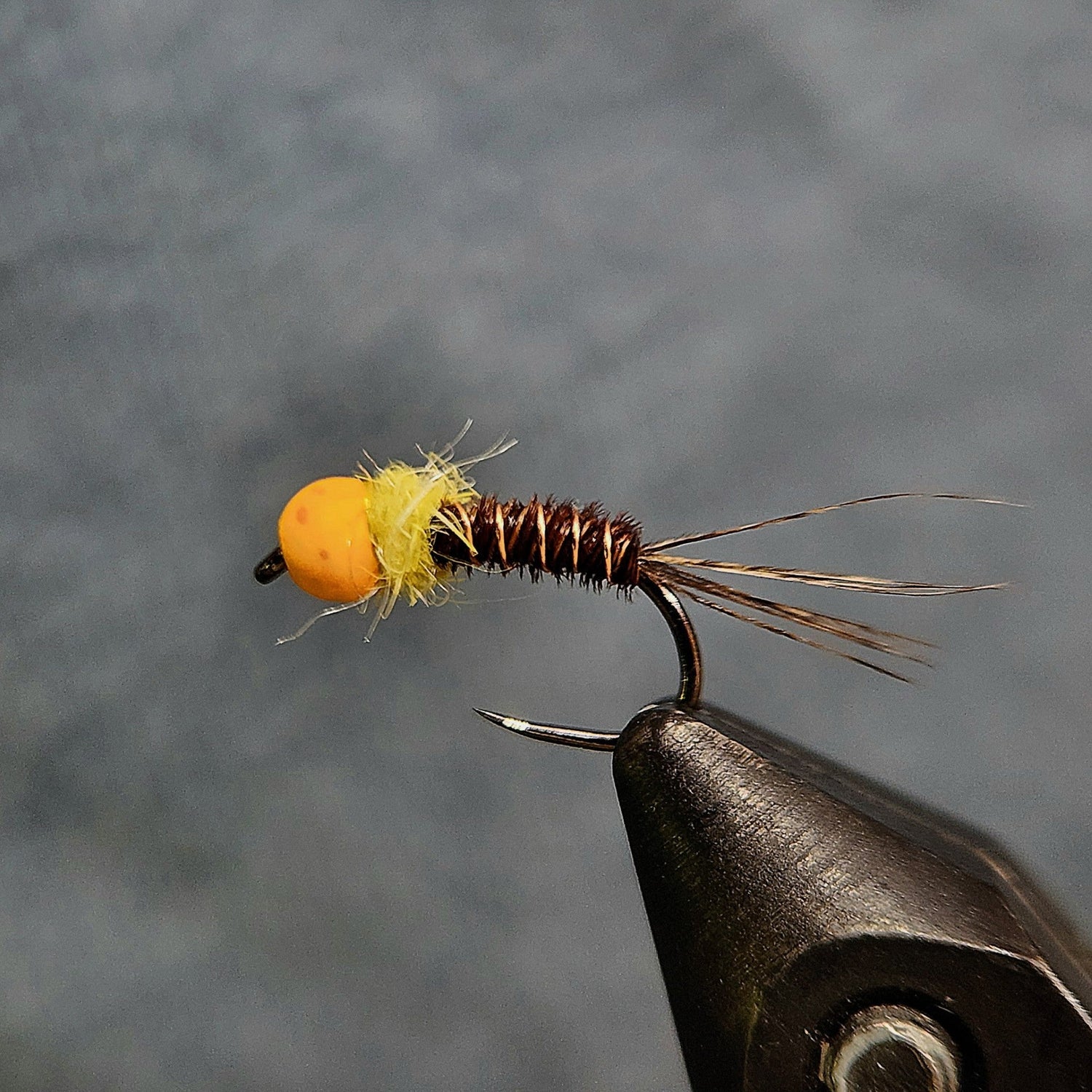
Every hook we make is barbless. Not most of them. All twenty-eight models, every size.
Barbless usually gets sold as something you give up for the fish. That is half the story. There is a trade, and we will tell you exactly what it is. But a hook built barbless from the start, kept sharp and fished on a tight line, gives up less than most anglers expect, and it gives a lot back.
A clean point goes in easier
A barb is metal left standing behind the point. To bury a hook past the barb, you have to drive the point through that little speed bump first. Without one, there is less to push through, so the point can run to the bend with less force. On a soft take on a size 20 in cold water, that helps.
It only pays off if the point is sharp to begin with. Leaving off the barb does not sharpen anything. That is why every Firehole hook is chemically sharpened, and why we built the geometry around barbless: on most of our models the gape runs wide and the point turns up toward the eye, closer to the line of pull.
The trade
This is the worry every time: won't I drop more fish? Sometimes, yes. A barb resists the hook backing out, and without one you may lose the occasional fish on slack line.
What keeps a barbless hook in is tension. Buried to the bend, rod loaded, line tight, and the hook stays seated. Line control matters more than it does with a barb. Competition anglers fish barbless by rule and land plenty.
Cleaner in, cleaner out
Barbless comes out the way it went in. That means less handling and less time with a fish out of the water, and time out of the water is one of the biggest factors in how well a released fish recovers. Less damage to the fish, to your net, and to your own thumb at the end of a long day. You unhook faster and get back to fishing. Every Firehole Stick comes barbless out of the pack, so there is nothing to pinch and nothing to fumble streamside.
The occasional fish lost on slack line, for a faster, cleaner release every time. We think that trade is worth it.
Better at the vise
A barb crowds the point and grabs thread right where you want a clean wrap. A barbless point gives you room to work and a fly that sits right. And you skip the worst job in tying: pinching down barbs one at a time with pliers, hoping you do not weaken the wire or roll the point over. Factory barbless is consistent, hook after hook, so the fly you tie tonight matches the one you tied last week.
Better for the fish, too
A faster, cleaner release is easier on a fish, which is why many catch-and-release waters require barbless hooks. We make the full case on our Why Barbless page. For the design side, read What Makes a Good Barbless Hook.
Sticks are barbless on purpose. Clean point, cleaner release, fewer compromises at the vise. Browse the Firehole Sticks and tie your next fly on one.

Leave a comment
All comments are moderated before being published.
This site is protected by hCaptcha and the hCaptcha Privacy Policy and Terms of Service apply.