
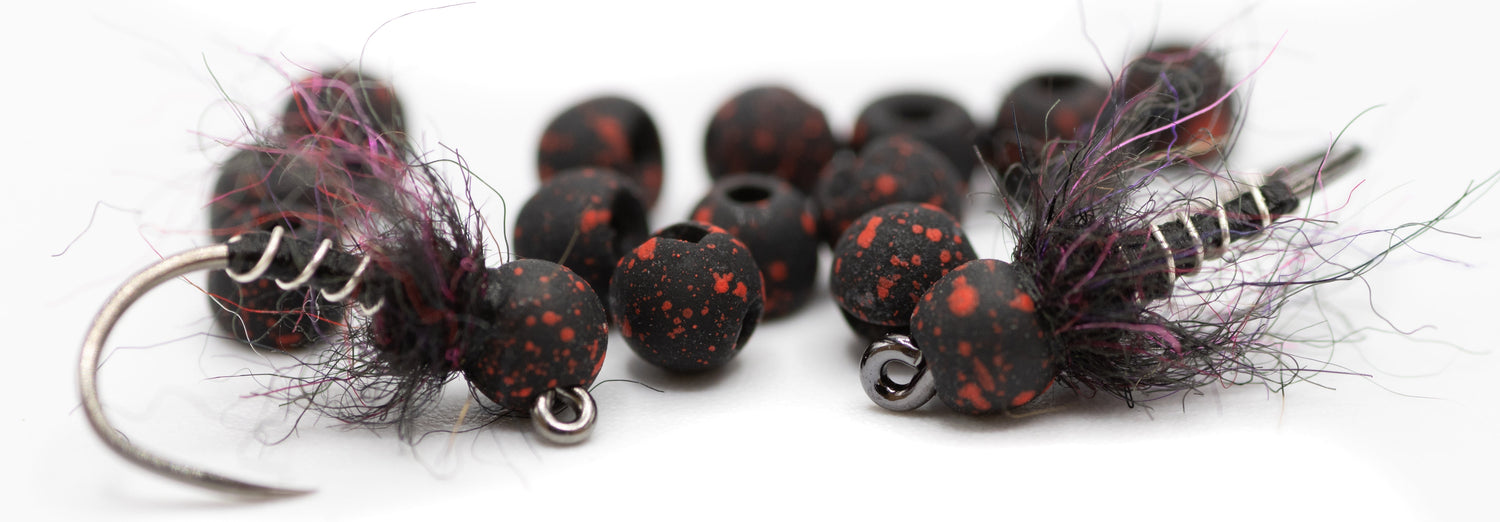
A Euro nymph has one job. Get down to where trout are feeding and keep drifting once it's there. Too light and it never arrives. Too heavy and it spends the run on the rocks.
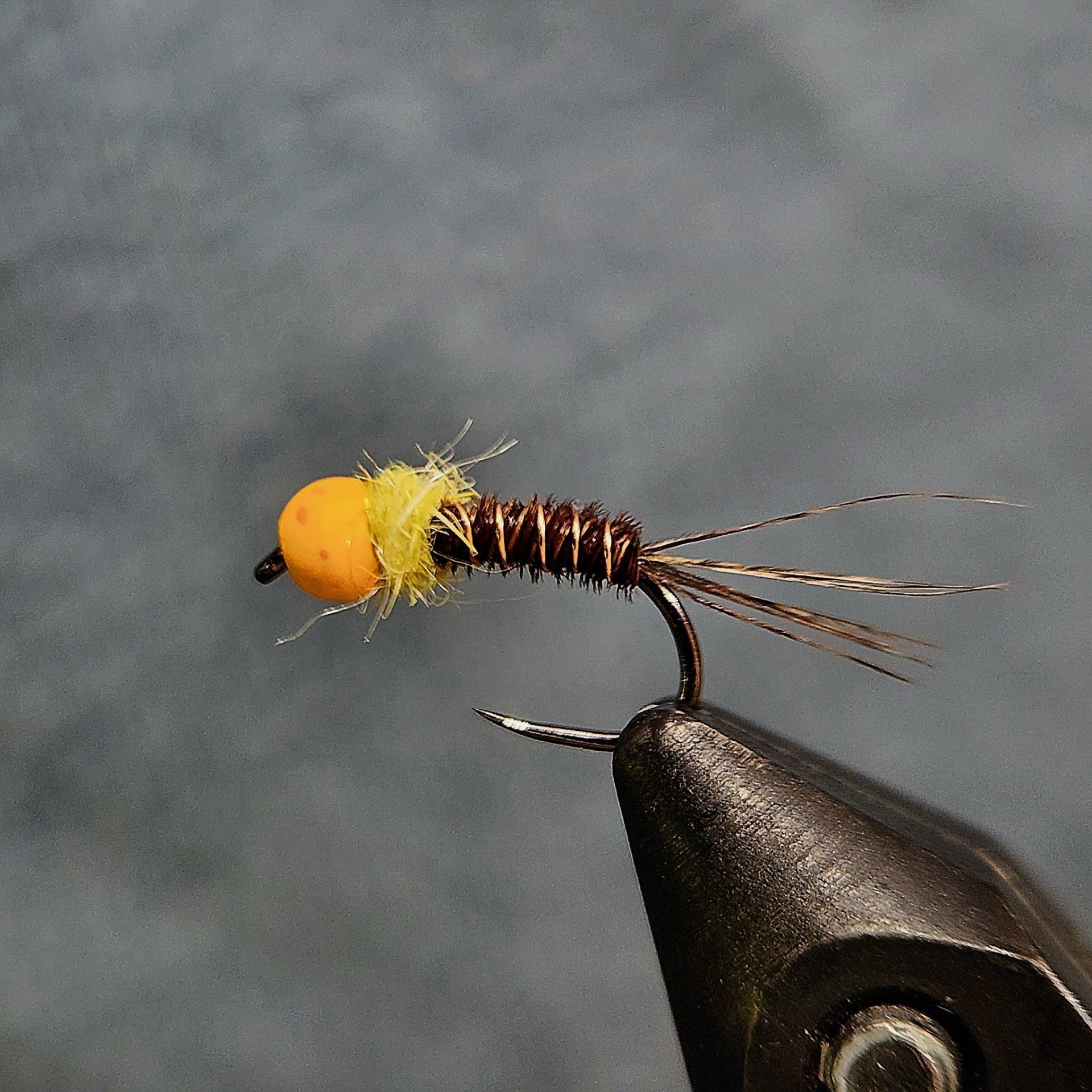
A jig hook and a slotted tungsten bead are where most tyers start. The hook is the platform. The bead carries most of the weight. Together they set how the fly sinks and how it rides.
Three questions get the pairing right. Does the bead fit? Does it leave room to tie the fly? Does the finished fly carry the weight you need?
What a jig hook changes
The five Firehole jigs below are bent at 60 degrees behind the eye. That bend changes where the tippet pulls, where the bead sits, and how the weight hangs below it.
With a tungsten bead on, the hook tends to ride point-up, which keeps the point off a lot of the bottom. It does not make the fly snag-proof. Weight, dressing, current and leader tension all have a say, and a jig will still tumble and still hang up.
Our guide to hook eye types covers eye angles in more detail.
Why slotted tungsten
A slotted bead has a channel cut into its large end. The channel clears the bend of a jig hook so the bead can slide around it and seat at the eye.
Tungsten puts a lot of weight in a small head. A slim nymph gets down without turning into a bulky one.
On a Firehole jig, start with Slotted Tungsten Stones.
A round countersunk bead will go onto some jig hooks. Getting it on and getting it seated are different problems. Bore, wire diameter and the shape of the bend all decide it. Test the pairing on a bare hook before you tie a dozen.
Fit, room, weight
The tungsten bead size chart gives a starting range for each hook size. Use it to narrow the choice, then put the actual bead on the actual hook.
The bead should slide into place without force. Once it's there you still need a clear eye, room on the shank for the body, and open gape under the finished fly.
That settles whether a pairing works at the vise. Choosing between two that both work is a fishing decision.
A smaller bead means less weight and a smaller head, for shallower water or a slower fall. A larger bead gets down farther and faster. Smaller is not automatically better. The right bead is the one that reaches the feeding depth and still drifts.
If the fly hangs up every few casts, go lighter. If it never touches down, go heavier. Check your casting angle, tippet and dressing first. All three change how fast the fly sinks.
Half a millimeter matters
A raw 3.0 mm slotted Stone weighs 0.21 grams. A 3.5 mm weighs 0.33 grams.
That half-millimeter step adds 0.12 grams, more than half again the weight, before you touch the hook or the dressing. It is enough that tying one pattern in both sizes is worth the time.
Those are bead weights, not sink rates. A slim resin nymph and a heavily dubbed one will fall differently on the same bead.
Full component weights are in The Stone Stack. For deliberately big heads, see Oversizing Tungsten Beads.
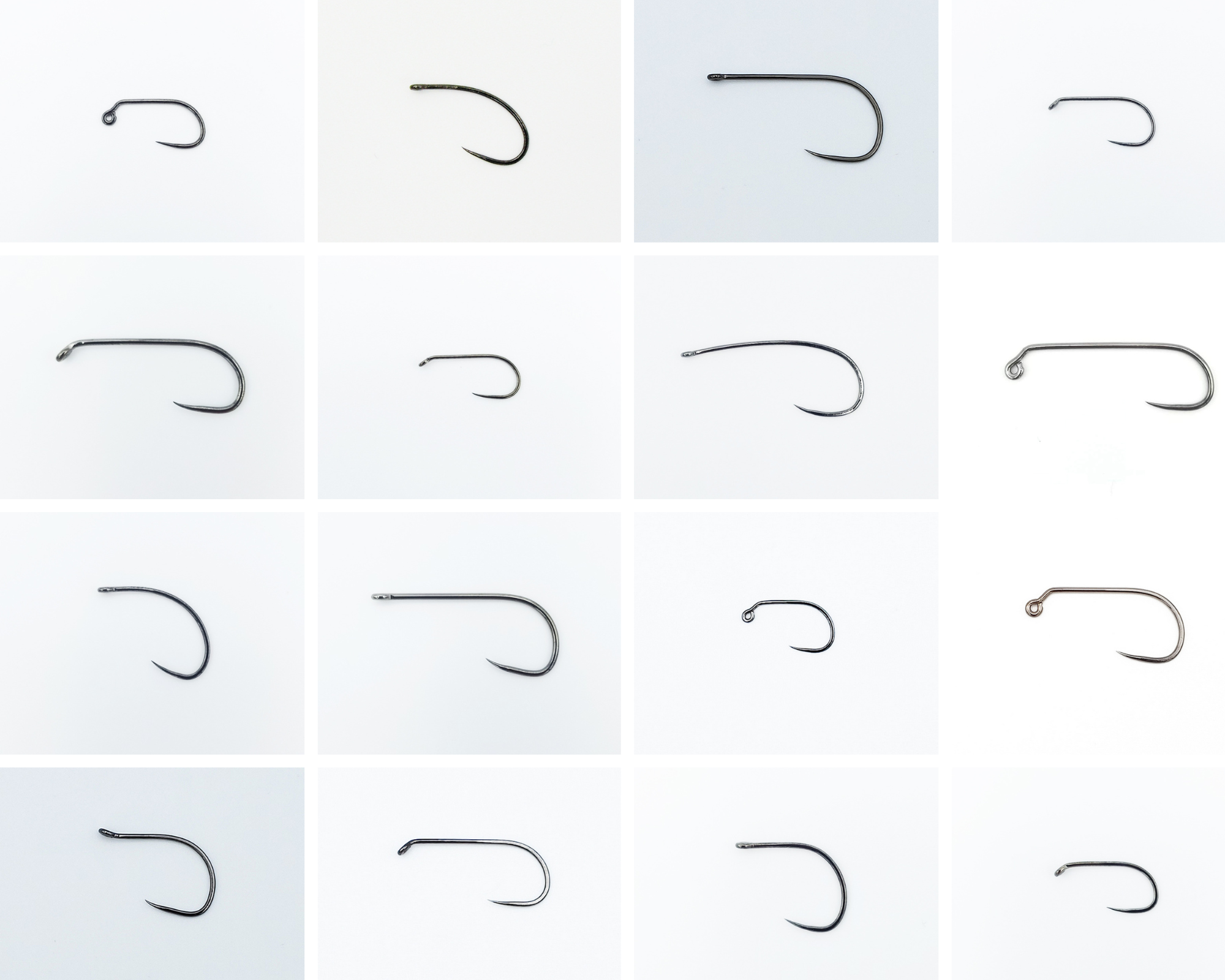
Which Firehole jig hook
Pick the shape the pattern needs. Then match the bead to the hook size you are tying.
| Hook | What sets it apart | Reach for it when |
|---|---|---|
| 516 | Standard length, heavy wire, 1XG, 60-degree jig. #4 to #24. | Everyday jig nymphs, perdigons and slim patterns. The place to start. |
| 520 | 60-degree eye on a continuous bend. Heavy wire, 1XL, 2XG. #4 to #20. | You want a curved body on a jig. |
| 551 | 60-degree jig. Heavy wire, 1XL, 2XG. #4 to #20. | You want more shank and more gape than the 516. |
| 535 | 60-degree jig on the 551's proportions, eye turned perpendicular to the shank so a larger bead seats without slipping off. #10 to #18. | You want a heavier bead to stay put at the eye. |
| 523 | 60-degree jig. Heavy wire, 3XL, 1XG. #4 to #14. | Stoneflies, crawlers, anything with a long body. |
All five are manufactured barbless. What separates them is shape, length and gape, and that is what you are choosing.
Does a Euro nymph need a jig hook?
No. Straight and curved nymph hooks earn a place in a Euro box too.
Use a jig when its shape suits the pattern and the drift. Use a conventional or curved hook when it gives you the body, the room or the bead setup you want. A nymph you already trust does not need rebuilding on a jig because you plan to fish it on a tight line.
The hook selection guide covers the rest of the line.
One pattern, two weights
Pick a pattern you already trust. Keep the hook model, hook size and dressing the same. Tie it with two adjacent bead sizes that both fit.
Check the eye and the open gape on each. Fish them through the same water. Watch how fast each one gets down, how often it hangs, and how freely it drifts.
That gives you something to bring back to the bench: a reason for the next bead.
Firehole jig hooks and Slotted Tungsten Stones are in the shop when you're ready to tie both.
~John

Leave a comment
All comments are moderated before being published.
This site is protected by hCaptcha and the hCaptcha Privacy Policy and Terms of Service apply.