
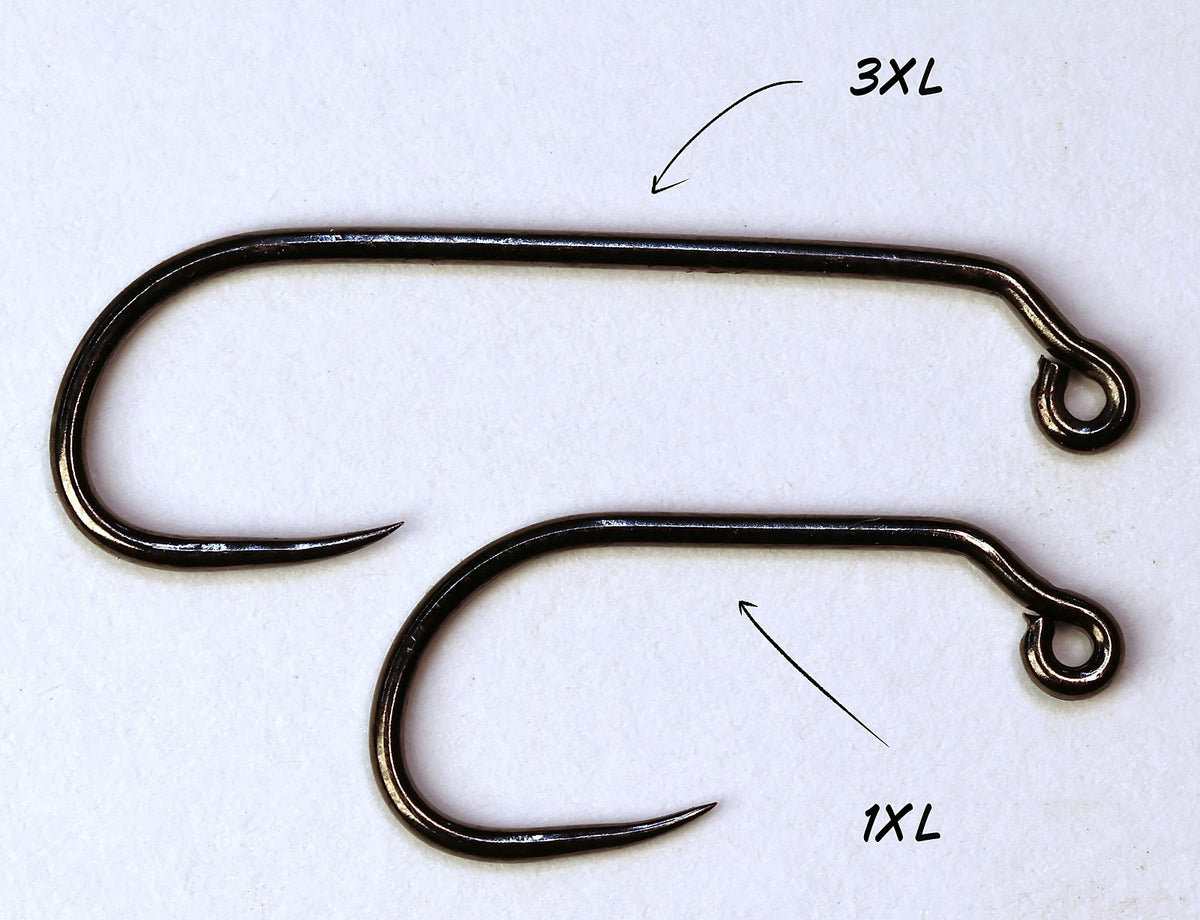
Read a hook's spec and you will see tags like "2X long," "2X heavy," or "2XG." That is the X system, shorthand for how a hook differs from a standard hook of the same nominal size. Longer, shorter, wider, heavier, finer. The X tells you what changed.
The X system isn't really about memorizing hook terminology. It's a shorthand for understanding what the hook designer changed, and why.
Once you can read the tags, you choose on purpose.
What the X changes
Hook size gives you the hook's basic size designation. The X system tells you how a particular dimension departs from that hook maker's standard for that size. A size 12 that is 2X long is still labeled a size 12, but it carries a longer shank. A 2X heavy size 12 keeps roughly the same basic proportions but uses heavier wire.
The three things X usually describes
- Length. 2X long (2XL) means a longer shank; 2X short (2XS) a shorter one. This is how you get a stretched hopper or stonefly hook, or a compact short-shank one.
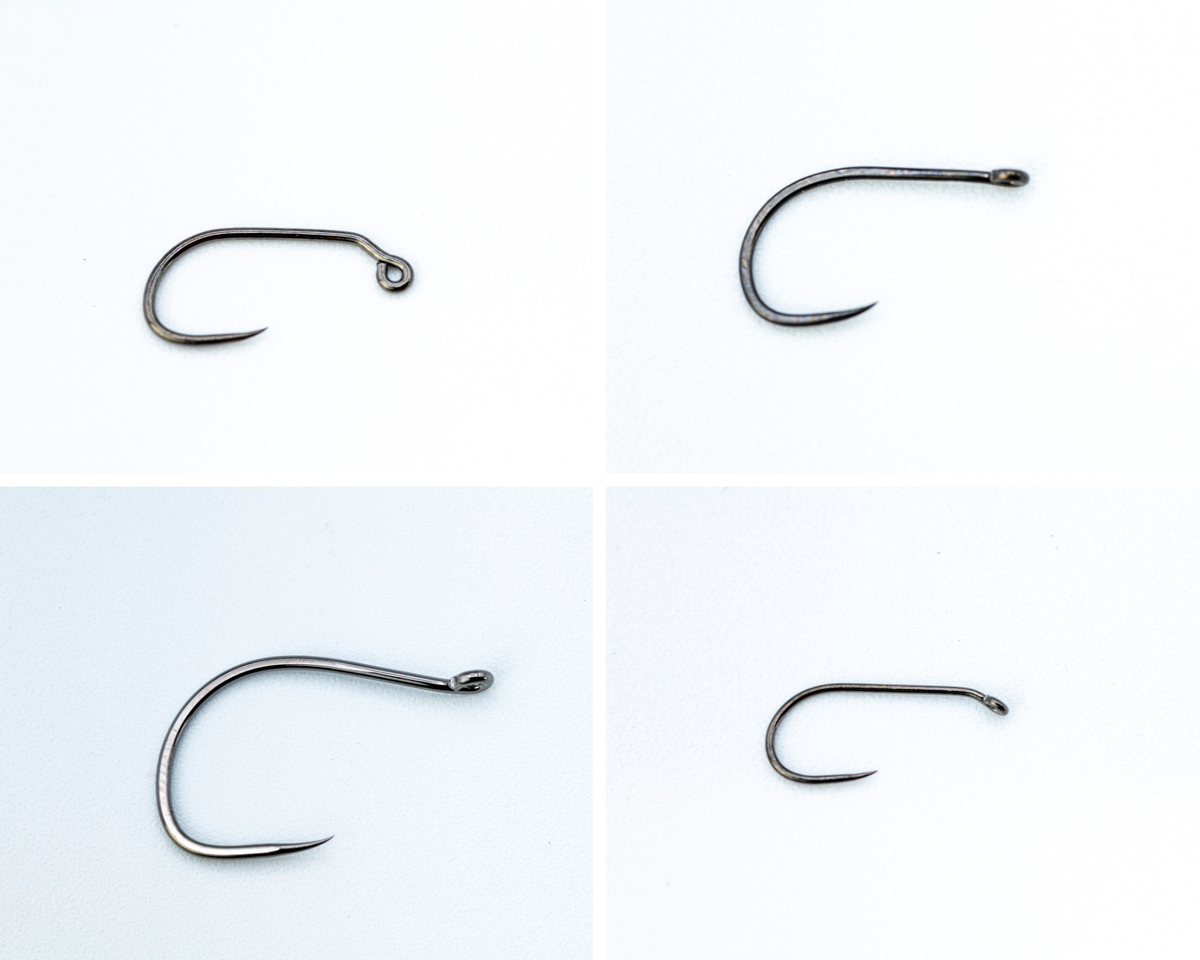
- Gape. 2X gape (2XG, also written "2X wide") means a wider gape than a standard hook of that size. That gives you more clearance between the point and shank, which can be useful with bulky flies, larger beads, or patterns that would otherwise crowd the gape. On our hooks you will see this written as 2XG.
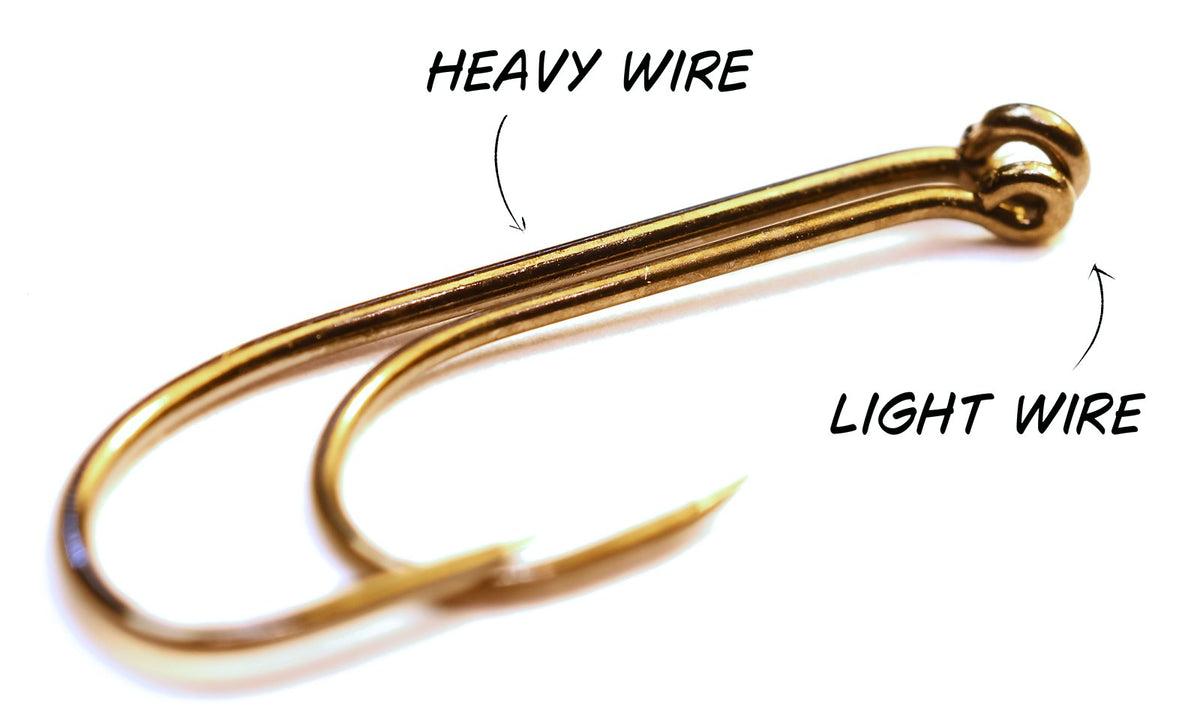
- Wire. 2X heavy means thicker wire; 2X fine means thinner. That is a strength-and-weight choice, and it gets its own Wire Weight lesson.
The number tells you the degree of departure from standard: 3XL is longer than 2XL, which is longer than 1XL. The same basic idea applies to heavy, fine, short, and wide designations.


And the Xs can stack
A hook doesn't have to be just one thing. It might be 2X long and 1X heavy, or short-shanked and wide-gaped. Each X describes a different part of the hook. Read them separately and the overall geometry starts to make sense.
How much is "one X," really
Traditionally, each X represents roughly one hook-size step in the dimension being described. A 1X-long #12 has roughly the shank length associated with a standard #10; a 2X-long #12 roughly a #8. The hook is still sold as a #12 because the X designation is telling you what has been changed from the base size.
But don't turn that into a ruler. There is no universal dimensional standard for the X system, and manufacturers don't all establish their "standard" hook the same way. A 2XL from one brand therefore won't necessarily measure exactly like a 2XL from another. X is best understood as a relative specification within a hook system, not an absolute measurement.
When the actual dimensions matter, use the numbers. Wire diameter, length, and gape are listed by size on every hook's product page, and the Hook Finder puts the full specs side by side.
Why it matters at the vise
The X system becomes useful when you stop reading it as jargon and start reading it as instructions.
- 2XL? More shank for the same basic hook size. Think hoppers, stoneflies, and longer-bodied nymphs.
- 2XG? More open space between the point and shank. Useful when bead size, bulky materials, or fly proportions would otherwise crowd the gape.
- 2X heavy? More wire. That can mean greater strength, more weight, or both.
- 2X fine? Less wire. Think lighter flies, finer presentations, and less hook weight.
Once you understand those four labels, a hook description starts telling you what the designer was trying to accomplish.
New to the line? Start with how hook sizing works, or choosing a Firehole hook, then browse the full Firehole Sticks range.

Leave a comment
All comments are moderated before being published.
This site is protected by hCaptcha and the hCaptcha Privacy Policy and Terms of Service apply.