
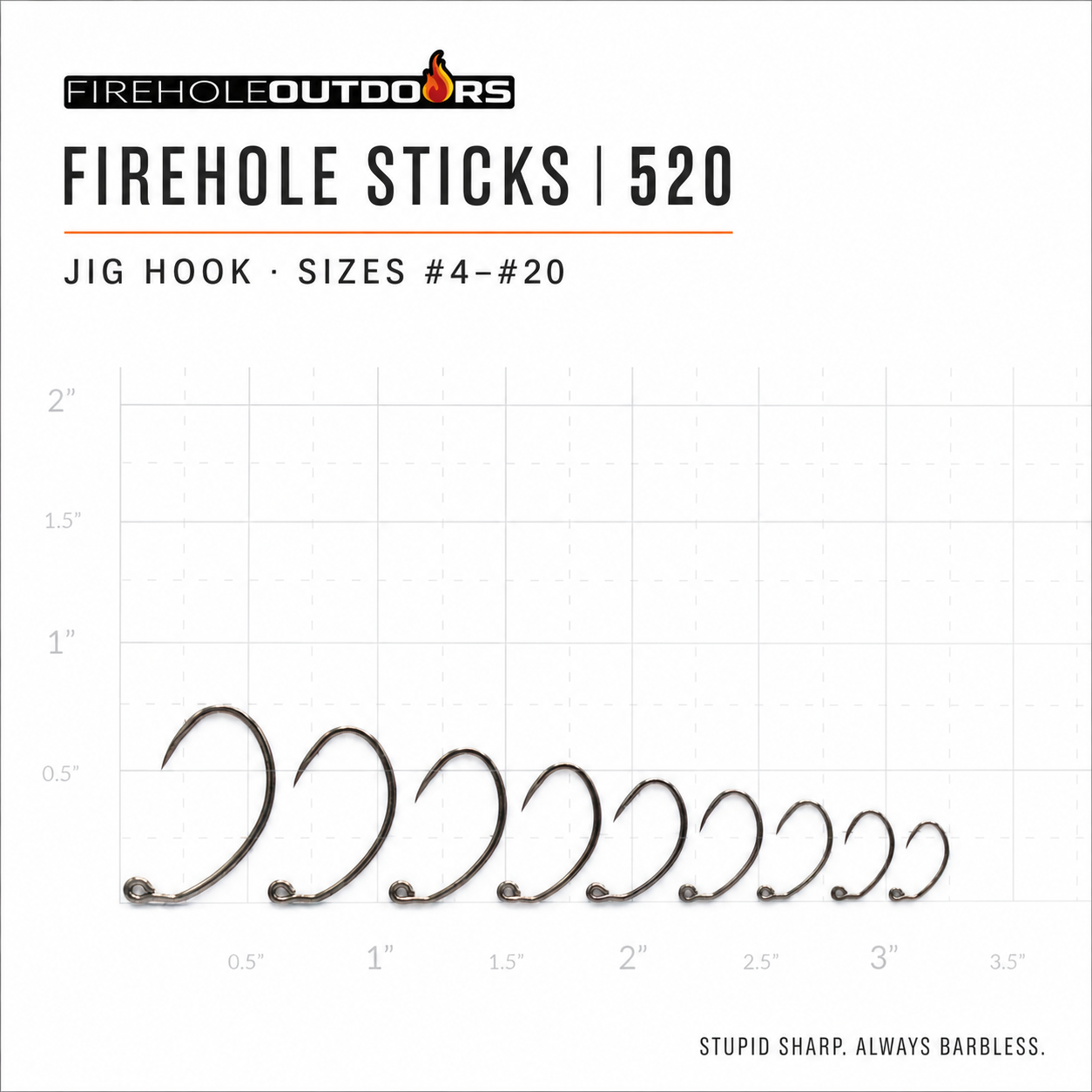
Fly hook sizing surprises everyone at first, because it runs backward: the bigger the number, the smaller the hook. A 22 is tiny. A 2 is big. Once that clicks, the rest of the scale is simple.
Bigger number, smaller hook
Trout hooks run in even numbers: 2, 4, 6, 8, and up through 22, 24, 26, and 28 for the smallest midges. As the number climbs, the hook shrinks. A size 12 nymph is bigger than a size 16, which is bigger than a size 20. Odd sizes are rare, with one exception: size 1, which sits between 2 and 1/0 on streamer and predator hooks. Otherwise the even numbers are what you will actually shop.
Where the scale flips: aught sizes
Head the other way, past size 2 and then size 1, and the numbering changes. It flips to "aught" sizes, written with a slash: 1/0 (said "one aught"), then 2/0, 3/0, and up. Now a bigger number means a bigger hook again. A size 2 is small, a 2/0 is large, and a 5/0 is a big saltwater or predator hook. Streamer and predator hooks live up in this range.
So the full scale runs, small to large: 28, 26 ... 6, 4, 2, 1, then 1/0, 2/0 ... 5/0 and beyond.
What the number actually measures
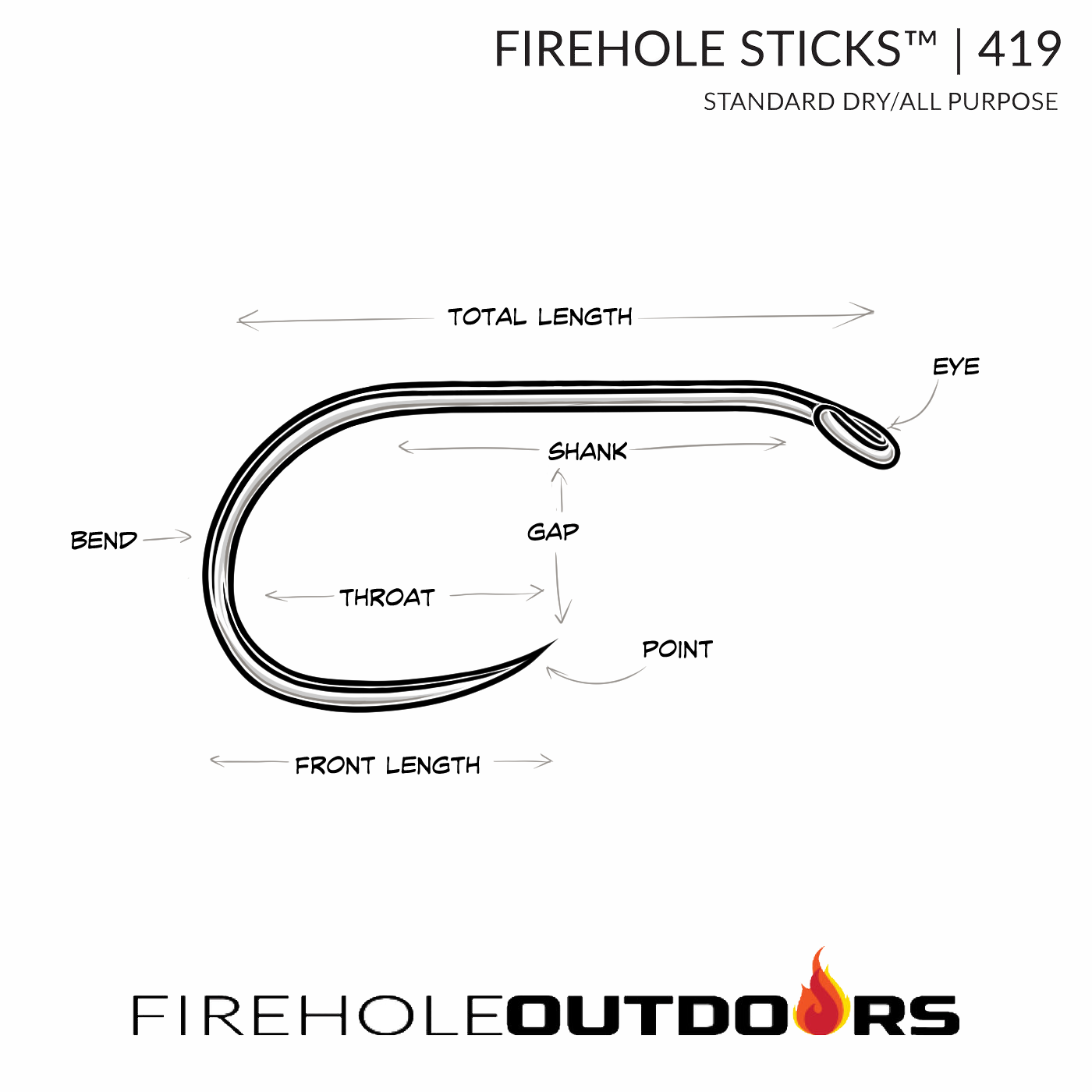
Traditionally, size is set by the gape, the distance from the point to the shank (see the Hook Anatomy lesson). A standard size 14 has a standard size 14 gape. Shank length and gape can be modified on their own, which is what the X System lesson covers, so a hook can be a size 14 in the gape but carry a longer shank.
The catch, worth repeating: no universal standard
Here is the honest part, and it carries over from the anatomy lesson. There is no true industry standard for hook size. Some makers size by gape, some by shank length, some by both, so a size 14 from one brand is not always a size 14 from another. When it matters, match by measurement, not by the number stamped on the package. Our tungsten bead size chart and our hook comparison chart are built for exactly that.
Picking a size
Match the hook size to the fly you are tying and the insect you are imitating. Your pattern recipe gives you a size to start; the anatomy and X-system lessons tell you how gape and length shift within it, and the bead chart tells you what bead that size takes.
New to the line? Start with choosing a Firehole hook, or browse the full Firehole Sticks range.

Leave a comment
All comments are moderated before being published.
This site is protected by hCaptcha and the hCaptcha Privacy Policy and Terms of Service apply.