
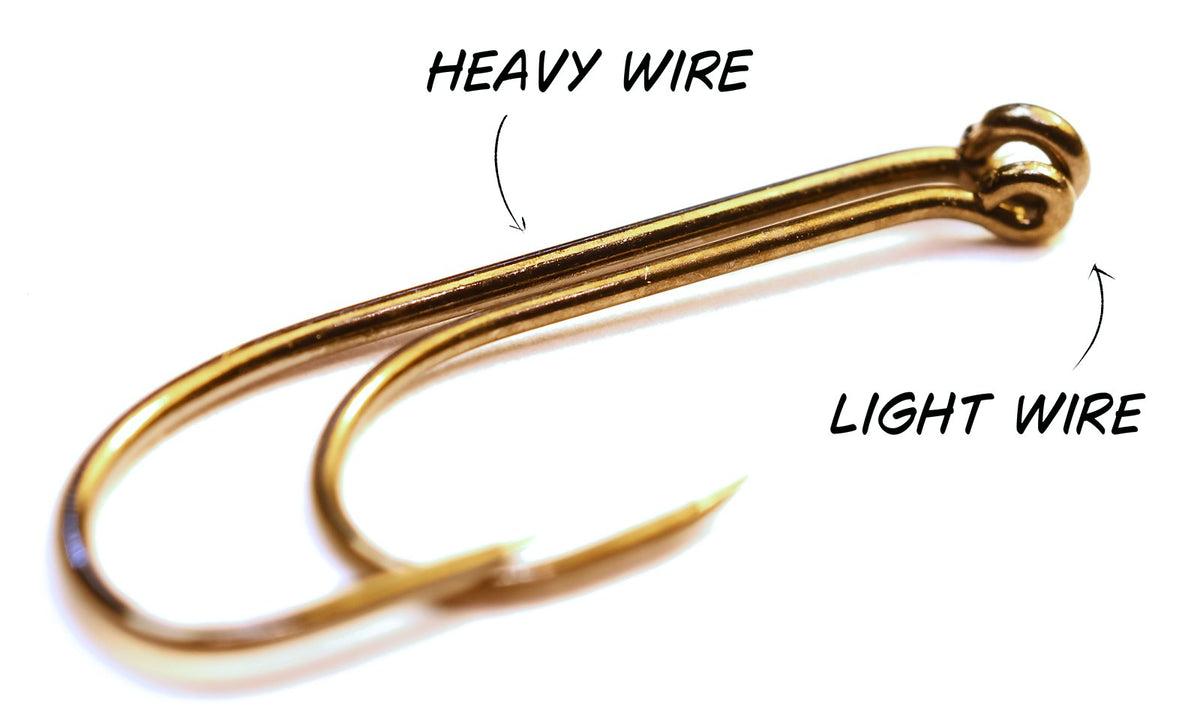
Hook Wire Weight: Fine, Standard, and Heavy Explained
Two hooks can be the same size and fish nothing alike, because of the wire. Here is what fine, standard, and heavy wire actually do, and how to pick.
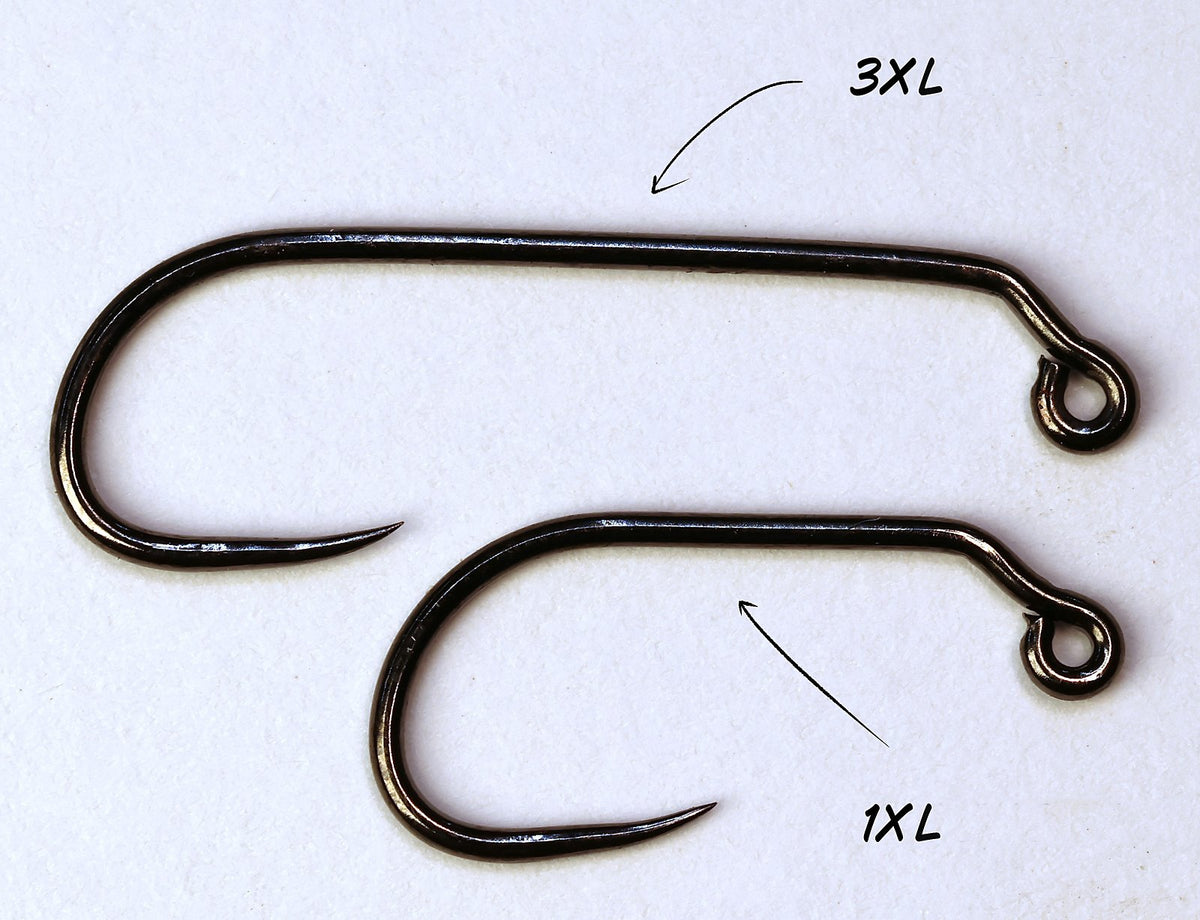
The Hook X System: Reading 2X Long, 2X Gape, and 2X Heavy
"2X long." "2X heavy." "2XG." The X system is shorthand for how a hook's proportions differ from a standard hook of the same nominal size. Here is how to read the tags.
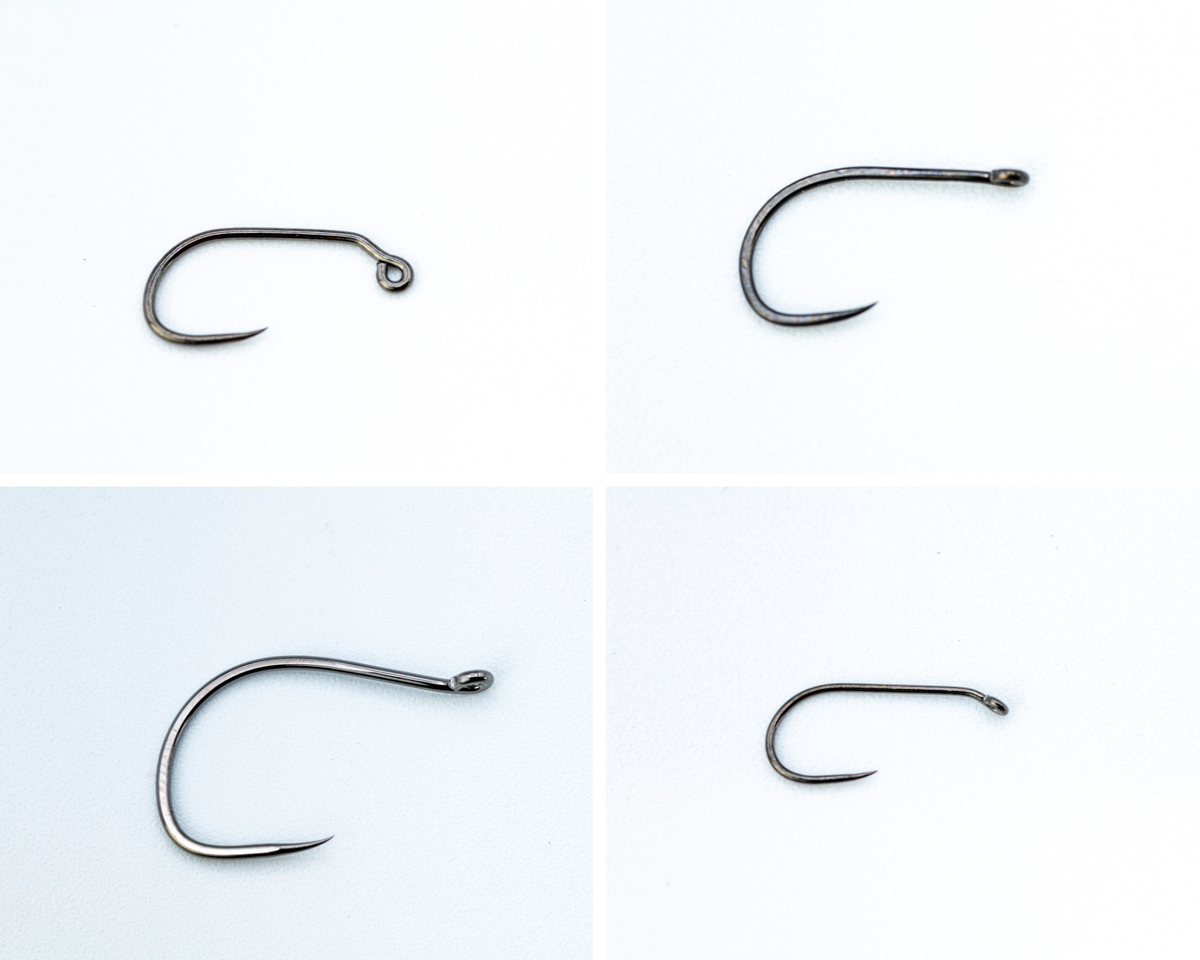
Hook Eye Types Explained: Straight, Down, Up, and Jig Hooks
Straight, down, up, or jig. The front of a hook comes in a few basic shapes. Here is what each one actually does at the vise and in the water.
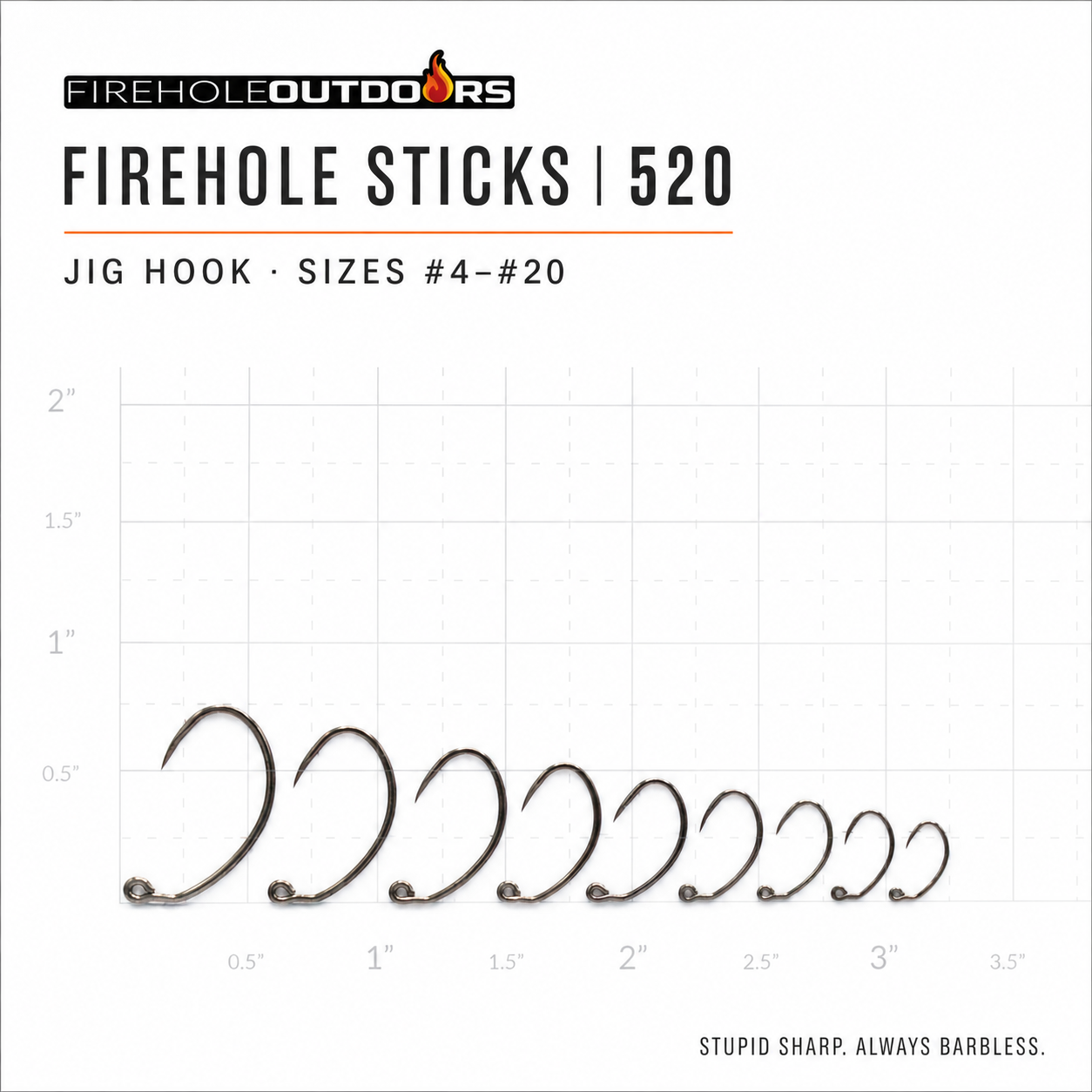
Fly Hook Sizes Explained: How Hook Sizing Works
A bigger number means a smaller hook. Here is how fly hook sizing actually works, where the aught sizes begin, and why a size 14 varies from brand to brand.
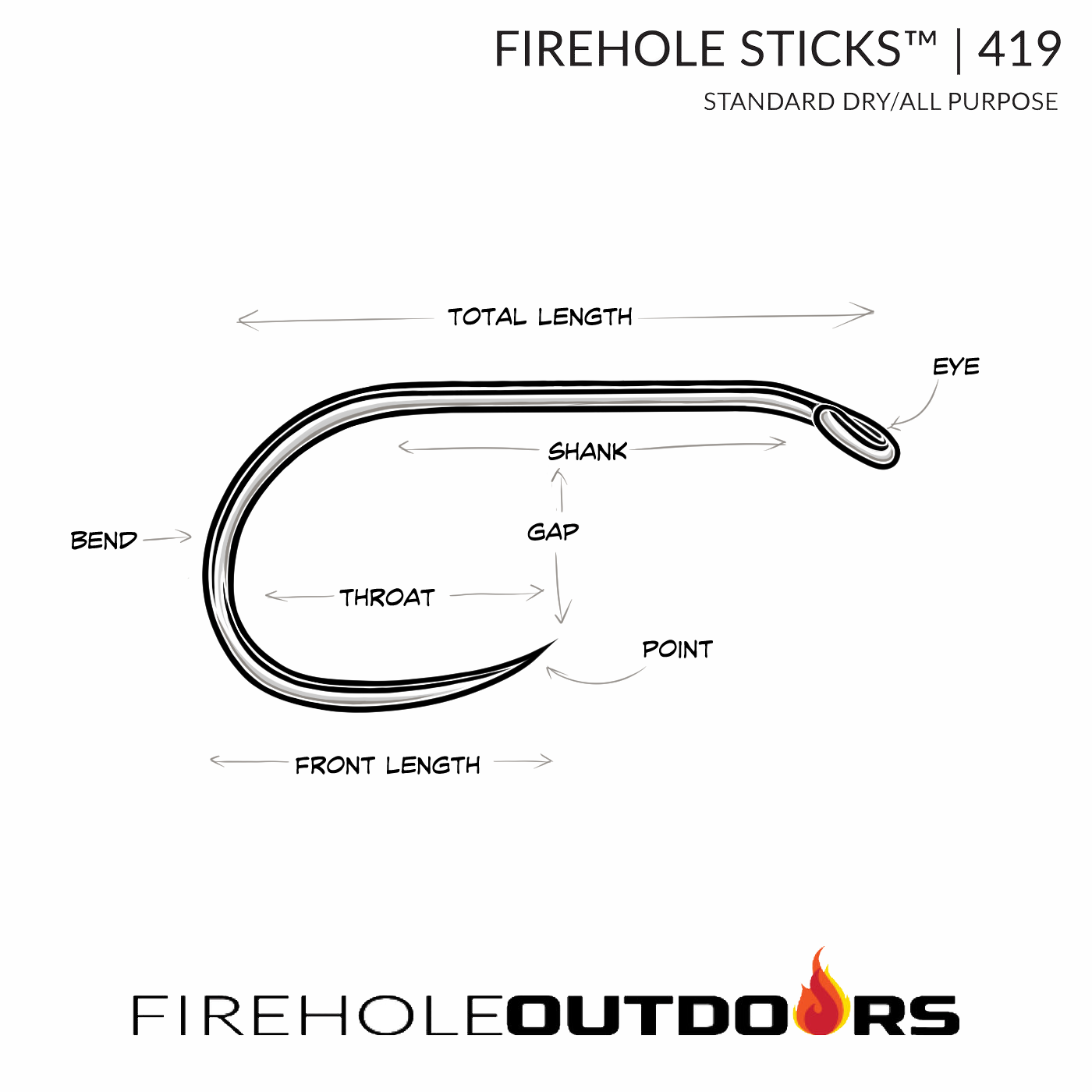
Fly Tying Hook Anatomy: Every Part Explained
Eye, shank, bend, point, gape, throat. Here are the parts of a hook and, more useful, what each one actually does when you tie and when you set.
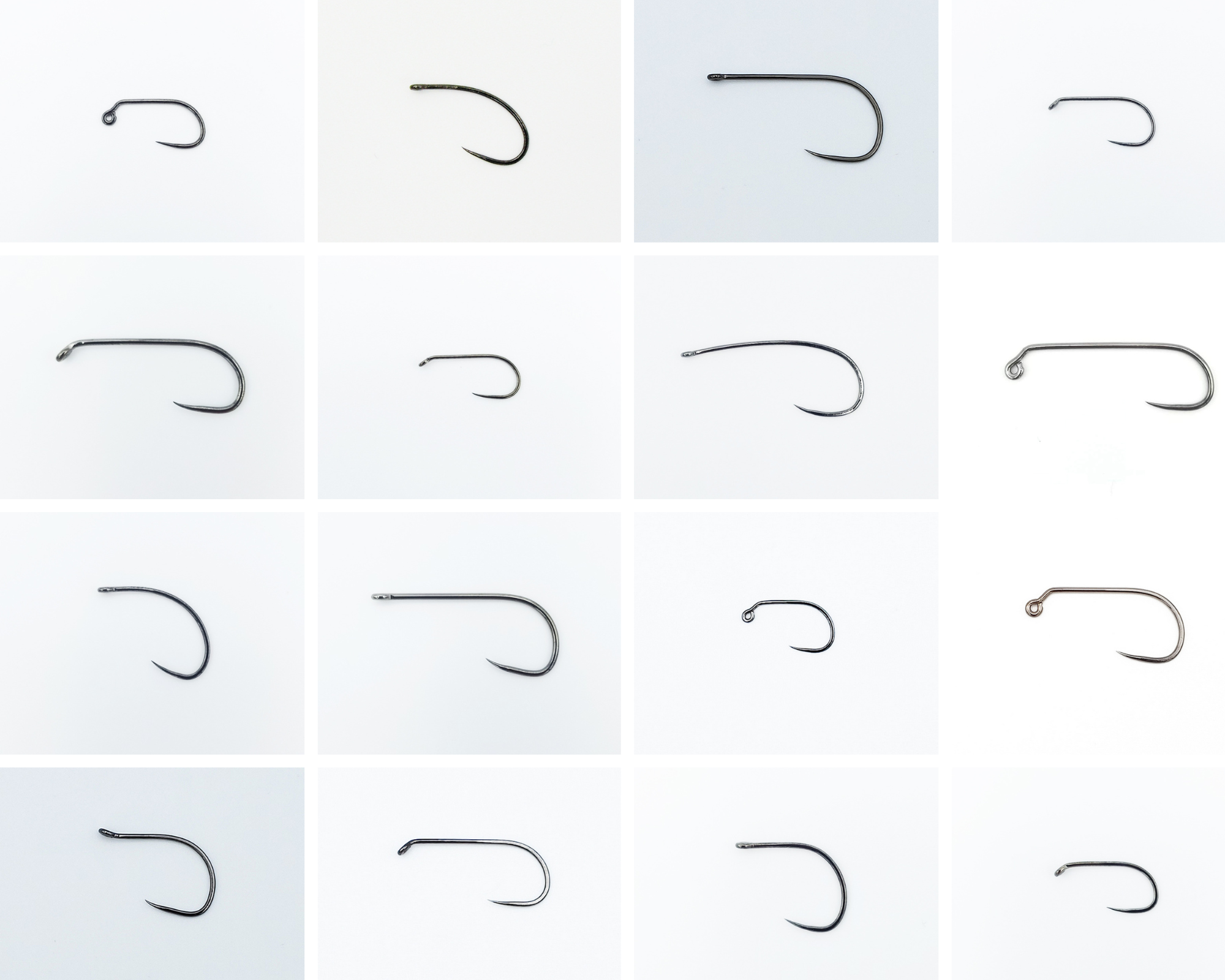
How to Choose a Fly Tying Hook: The Firehole Sticks Line by Fly Type
Twenty-eight barbless hooks, one for every fly. Here's how to choose a Firehole Stick by what you're tying, plus what the model numbers mean.