
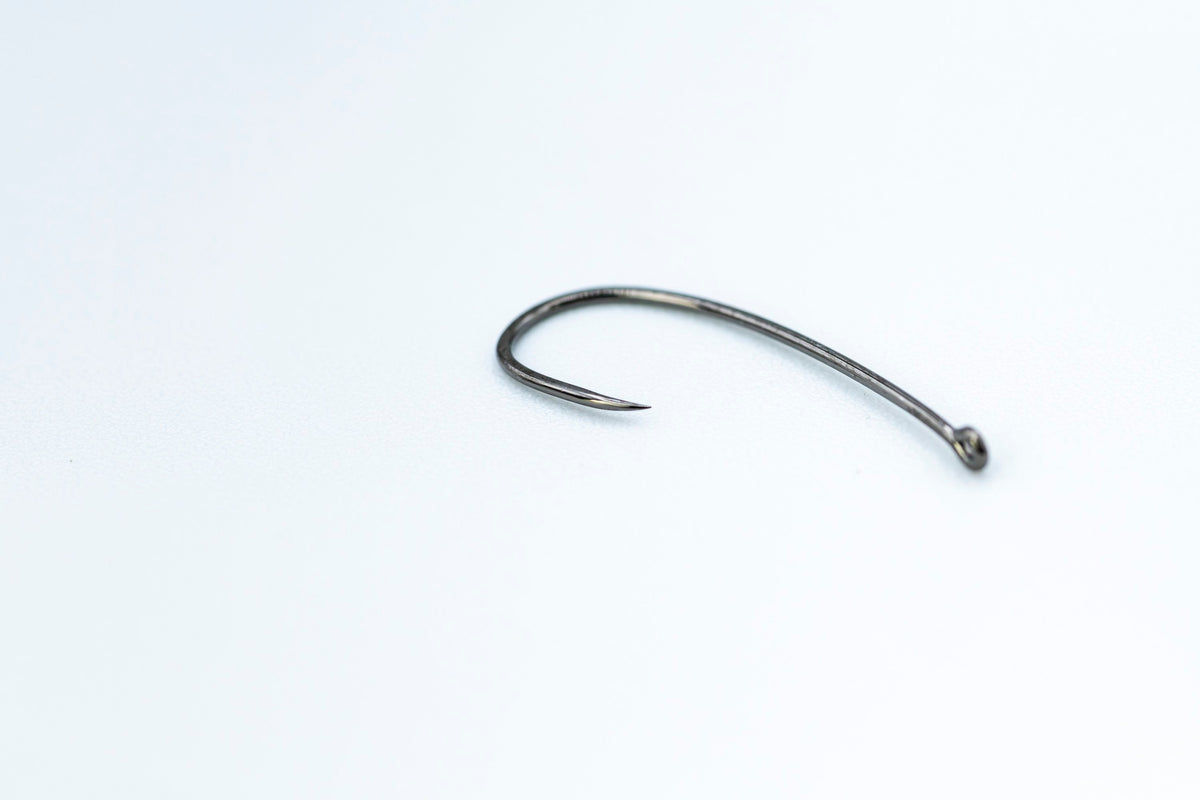
A barbless hook is easy to define: it has no barb.
A good barbless hook is harder to define.
Leaving off the barb doesn't automatically make a hook sharp, strong, or well designed. A barbless hook still has to penetrate, resist opening, give the fly the right proportions, and stay connected to a moving fish. That comes down to the rest of the hook.
Start with the point
A barb sits behind the point. Without one, there is one less projection that has to pass through tissue, which can reduce resistance as the hook penetrates.
But that advantage only pays off if the point is sharp to begin with. Leaving off a barb doesn't sharpen anything. The point still has to do the work. Sharpness, point length, diameter, taper, and geometry all affect how readily a hook begins to penetrate and how much force is required to drive it farther.
That is why "barbless" and "sharp" aren't synonyms. A good barbless hook starts with a good point.
Gape gives the hook room to work
The gape is the opening between the point and the shank. But what matters on a finished fly is usable gape, how much of that opening remains after you add the body, bead, foam, dubbing, or other materials.
That matters whether a hook has a barb or not. A heavily dressed fly can crowd the point and reduce the usable opening available for the point to engage. A hook with appropriate gape gives the fly enough room without simply making the entire hook larger.
Wide gape isn't automatically better. Enough gape is.
The bend matters too
The bend determines more than the shape at the bottom of the hook. It helps establish the hook's depth, gape, and where the point sits relative to the shank.
That relationship matters on a barbless hook because once it is set, there is no barb adding resistance if the point begins to move backward. Where the point sits, and how directly it lines up with the pull, matters more.
It is one reason most Firehole hooks run wide in the gape with the point turned up toward the eye. The extra room lets the point sit closer to the line of pull, which helps it seat on the hookset and stay seated through the fight. This is why looking at the whole hook matters more than simply asking whether it has a barb.
Wire has to match the job
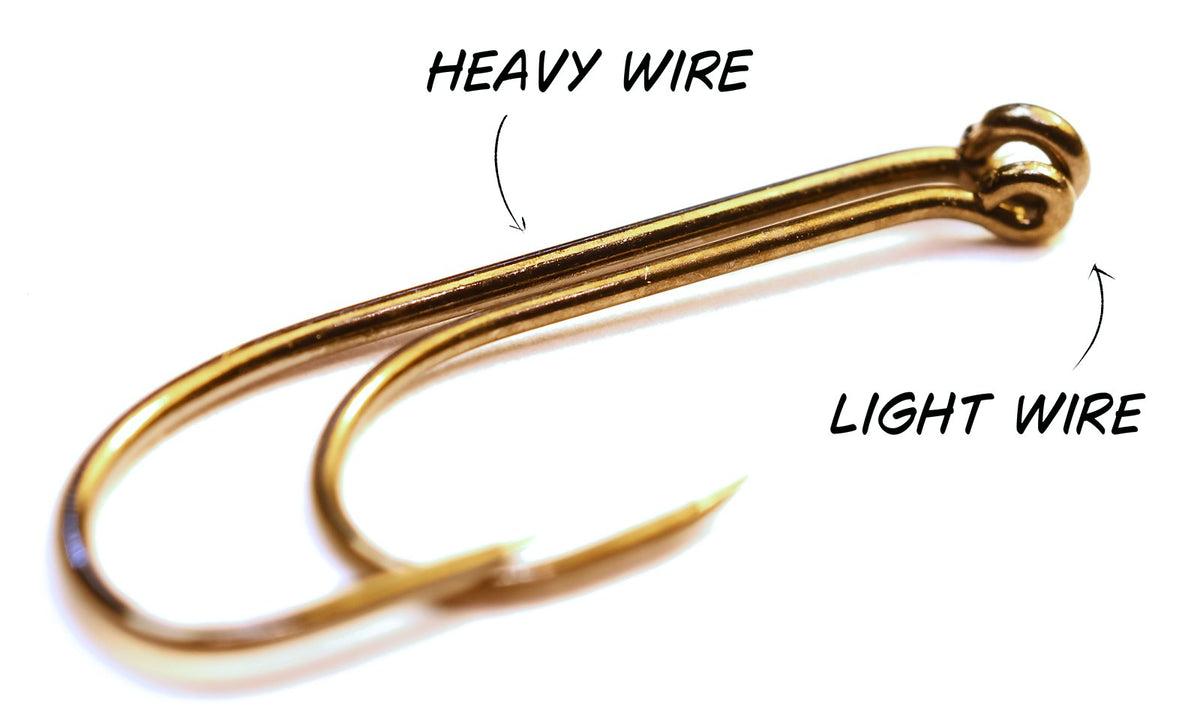
A barbless dry-fly hook and a barbless streamer hook shouldn't be made from the same wire simply because both lack a barb. Wire weight is still a design choice.
Fine wire reduces weight and can be appropriate for delicate flies. Heavier wire generally gives greater resistance to bending and may be appropriate for powerful fish, heavier tippet, or situations where substantial pressure will be applied.
The goal isn't to make every barbless hook heavy. It is to use enough wire for what that hook is intended to do.
What actually keeps a barbless hook in?
This is where barbless hooks are sometimes misunderstood.
A barb doesn't glue a hook into a fish. It creates an obstruction that resists the hook backing out after it has penetrated. Without that obstruction, maintaining the connection depends more heavily on the relationship between the hook's geometry and the pressure being applied to it.
In practical terms, that means tension matters. Once a barbless hook is embedded, steady tension helps keep the point seated and loaded in the bend. If the line goes slack, the hook has more opportunity to move backward, because there is no barb adding resistance.
That doesn't require some completely different way of fighting fish. It does reward good line control.
There is a trade here. You may lose the occasional fish on slack line. What you get back is a faster release. A barbless hook comes out quicker, which means less handling and less time out of the water, and time out of the water is one of the biggest factors in how well a released fish recovers. We think that trade is worth it.
Purpose-built barbless vs. pinched barb
You can make a conventional barbed hook barbless by crushing the barb. It works. Anglers have been doing it for generations.
But that isn't necessarily the same thing as designing a hook to be barbless from the beginning. When a hook is purpose-built as barbless, the designer can consider the point, gape, bend, wire, and overall proportions without needing to accommodate a barb in the design or manufacturing process.
That doesn't mean every purpose-built barbless hook is automatically better than every hook with its barb pinched down. It means barbless can be a design decision instead of a modification. That distinction matters to us.
Sharpness matters more than the label
One of the easiest mistakes in buying hooks is focusing on categories instead of the actual hook. Barbless. Wide gape. Heavy wire. 2X long. Those descriptions tell you something useful, but none of them tells you whether the hook is good.
Pick it up. Look at the point. Look at the gape. Look at where the point sits relative to the shank. Look at the bend. Consider the wire. Then consider whether all of those pieces make sense together for the fly you want to tie and the fish you want to catch.
That is hook design.
Why Firehole is barbless
Every Firehole Stick is manufactured barbless. Not because every angler has to fish that way. And not because leaving off a barb magically makes a hook better.
We chose barbless because we believe a properly designed hook can penetrate efficiently, stay secure under steady tension, and release easily without relying on a barb. That puts more responsibility on the rest of the hook.
The point needs to be sharp. The gape needs to make sense. The bend and wire need to match the intended use. The proportions need to work at the vise and on the water.
In other words, barbless isn't the end of the design process. For us, it is where the design starts.
Want the broader case for fishing without a barb? Read Are Barbless Hooks Better?, or browse the full Firehole Sticks range.

1 comment
Larry Barnett
Great info on barbless hooks, keep up the good work and have a great fall!
Leave a comment
All comments are moderated before being published.
This site is protected by hCaptcha and the hCaptcha Privacy Policy and Terms of Service apply.