
A fly recipe says to tie it on a size 14 hook. Easy enough, until you put three different size 14 hooks next to each other and discover they aren't the same length, don't have the same gape, and may not even use the same wire.
So which one is really a size 14? All of them.
The number on the package is a starting point. Choosing the right hook for a fly means looking beyond that number and thinking about the proportions of the finished fly.
Start with the fly, not the hook number
When a pattern calls for a size 14, what you usually care about isn't the number itself. You care about the size of the fly you are trying to create.
For an imitation, that might mean matching the approximate size and proportions of an insect. For a streamer, terrestrial, or attractor, it may simply mean building the fly at the size you want to fish.
The hook is the framework you build that fly around. That means shank length, gape, bend, and wire can matter just as much as the size stamped on the package.
Hook size is only part of the story
As we covered in Hook Sizes, hook sizing isn't governed by a universal dimensional standard. A size 14 from one hook model can differ substantially in shank length, gape, bend, and wire from a size 14 in another model.
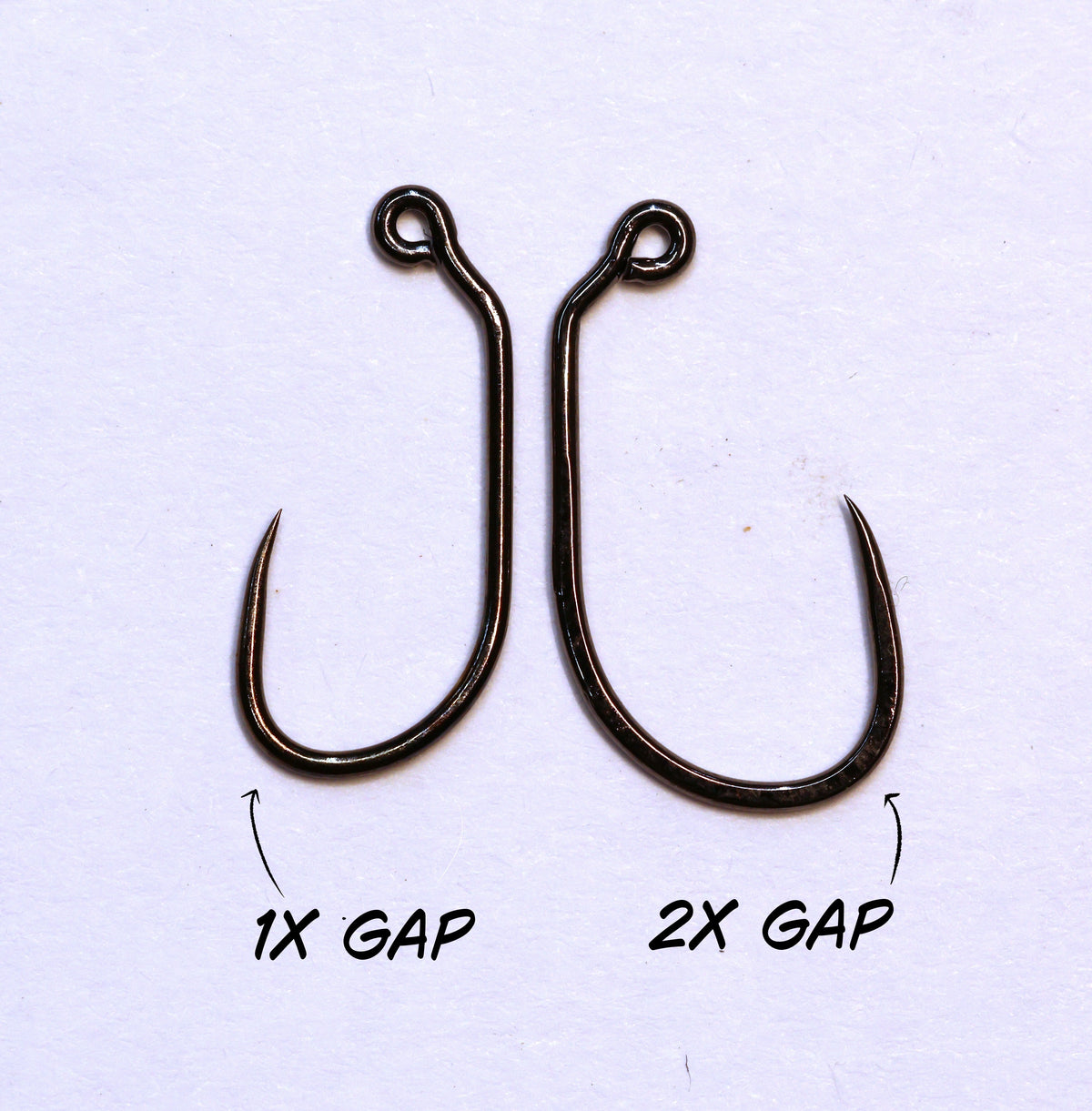
Then the X system deliberately changes those proportions. A 2X-long size 14 gives you more shank. A 2X-short size 14 gives you less. A wide-gape size 14 gives you more opening between the point and shank. Heavy and fine wire change the amount of steel without necessarily changing the nominal hook size.
The number stayed the same. The hook did not.
Think in proportions
One of the most useful habits you can develop at the vise is to stop asking "what hook size does this pattern use?" and start asking "what proportions does this fly need?"
Consider a traditional dry fly. The length of the shank helps establish the length of the body. Change the shank length and you change the proportions of the fly even if the number on the package stays the same.
A few classic dry-fly proportions, as starting points, show how much the hook drives the look:
- Tail: about one shank length on many traditional dry flies; some Catskill-style patterns run longer.
- Body: roughly 60 to 75 percent of the shank, leaving room for the hackle.
- Hackle: fibers about one and a half times the hook gape.
- Wing: about one shank length tall.
These aren't laws, but notice how often shank length and gape serve as the reference. A curved emerger or caddis pattern presents a different problem: the bend may become part of the body itself. A foam terrestrial may need enough shank to build the body but also enough usable gape remaining after foam and other materials are added.
Different flies ask different things from the hook.
Shank length can fool you
This is one of the easiest places to get confused. Imagine a standard size 12 hook beside a 2X-long size 14. The size 14 may provide a tying platform surprisingly close in length to the size 12, even though the packages carry different numbers.
If body length is what matters to the pattern, those hooks may produce similarly sized flies. But they aren't interchangeable in every respect. Their gapes, wire diameters, bends, and point positions may still be different.
That is why choosing a hook based only on shank length, or only on size, can lead you in the wrong direction.
Don't forget the finished gape
The bare hook isn't what the fish eventually sees. Once you add dubbing, chenille, foam, a bead, or other materials, some of the space between the body and hook point may disappear. That is the idea behind usable gape.
For a sparse fly, it may not be much of a concern. For a heavily dressed fly, it can become important. If getting the body proportions you want leaves the point buried against a thick body, moving to a hook with additional gape may make more sense than simply moving to a larger size.
The less open space left between the body and the point, the less room the point has to engage. On bulky patterns, that is worth checking before the fly ever gets wet.
Wire changes the equation too
The same fly can be tied on hooks with different wire weights, but it may not fish the same way.
For a dry fly, reducing hook weight can help when you want the fly to ride high. For a nymph, additional wire adds some weight and generally provides more resistance to bending. For heavier tippet, powerful fish, or situations where you expect to apply substantial pressure, additional wire may make sense even if the fly itself stays the same size.
So the question isn't only "how big should this fly be?" It is also "how does this fly need to fish?"
Beads complicate hook sizing
Add a bead and another dimension enters the decision. The hook needs to accept the bead, the bead needs to sit where you want it, and there still needs to be enough hook left to build the fly.
Going up a bead size can quickly change the fly's proportions, reduce the space left to tie, and, depending on the hook and dressing, crowd the usable gape. This is why choosing a hook and choosing a bead shouldn't always be treated as separate decisions. We cover that relationship in our guide to matching beads and hooks.
Hatch size is only a starting point
If you're matching a hatch, local observation, a hatch chart, or a trusted pattern can give you a starting size. But insects vary by species, region, season, and even from one hatch to the next.
The number gets you close. The finished fly still has to match the size and proportions you are trying to imitate.
Pattern recipes are recipes, not rules
If a trusted pattern calls for a size 16 hook, that's a very good place to start. But pay attention to the hook model too. If you substitute another manufacturer's hook, or even another model from the same manufacturer, the same size number may not produce exactly the same fly.
Instead of automatically reaching for the same number, compare the geometry. Look at the shank length. Look at the gape. Look at the bend. Check the wire. Then ask whether that hook gives you the platform you need to build the same fly.
Sometimes the right substitute for a size 16 isn't another size 16.
How to choose
When choosing a hook size for a pattern, work through the fly in this order:
- First, decide how big you want the finished fly to be.
- Then look for a shank length and bend that give you the body proportions you need.
- Make sure there is enough usable gape after the fly is dressed.
- Choose a wire weight appropriate for how the fly needs to fish.
- If you're using a bead, make sure the bead, hook geometry, and finished fly all work together.
- Then use the size number as a reference, not the final authority.
A pattern recipe gives you a starting hook. The finished fly tells you whether it is the right one.
New to the line? Start with choosing a Firehole hook, or browse the full Firehole Sticks range.

Leave a comment
All comments are moderated before being published.
This site is protected by hCaptcha and the hCaptcha Privacy Policy and Terms of Service apply.